Stories

Keeping things steady: CBS has flurry of renewals

In a TV world where shows can vanish quickly, there’s some good news:
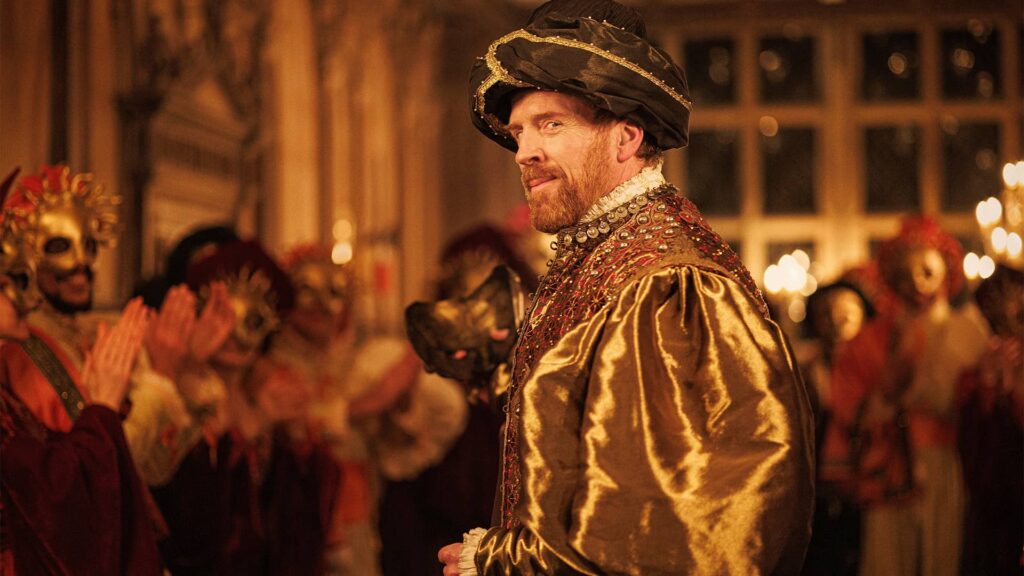
CBS has renewed nine more of its shows for next season. Also, PBS has renewed “Miss Scarlet” for a sixth season.
The CBS moves follow four previous renewals, plus three new shows. Two of the new ones are spin-offs (including “Sheriff Country,” shown here); this is not a network for chaotic change. Read more…

The world loved “Lucy” … and TV transformed

(This is the sixth chapter of a book-in-progress, “Television, and How It Got That Way.” For the previous chapters, scroll down under “stories.”)

As the 1951 season began, TV had a split personality.
Yes, there were promising signs from Sid Caesar, Ed Sullivan and lots of live dramas But there were also remnants of TV’s primitive start.
Look around prime time that fall and you’d find wrestling (twice) and boxing (twice). You’d find the “Georgetown University Forum” and “Johns Hopkins Science Review”; “Youth on the March” and “American Youth Forum.” You’d find “Marshall Plan in Action,” “Film Filler” and “Lessons in Safety.”
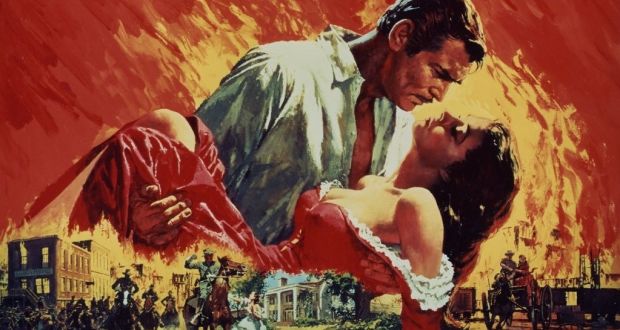
And into that shaky field – on Oct. 15, 1951 – “I Love Lucy” (shown here) debuted. It instantly fulfilled “every promise of the often harassed new medium,” a Hollywood Reporter critic wrote, adding: “It should bounce to the top of the rating heap in no time.“ Read more…

CW finds there’s life beyond Canada

Amid a sea of clever Canadians and tidy budgets, here’s a slight detour:
The CW network is adding a show that’s smart, fun and (surprisingly) American. “Good Cop/Bad Cop” (shown here) debuts at 9 p.m. Wednesday (Feb. 19), the perfect companion to the 8 p.m. “Wild Cards.”
For CW, this is part of a quick makeover. The network had been best known for slick superhero shows. It lost money, but its co-owners (Paramount and Warner Brothers) did well be then selling the same shows overseas.
Then CW was sold to people who had no interest in loss-leaders. They dumped all of the scripted shows (except “All American”), kept some unscripted ones and mostly started over. Read more…

After just 26 years, a new soap arrives

As she molded the glittery world of “Beyond the Gates” (shown here) Michele Val Jean suspected it might be an empty exercise.
After all, there hadn’t been a new daytime soap opera since 1999. Soaps were being canceled, not created.
“There were 13 on the air,” she said. “Now there are four – and one is streaming.”
But now it’s happening: At 2 p.m. Feb. 24, “Beyond the Gates” debuts on CBS. We’ll meet the Duprees, who are rich, Black, ambitious and – this is a soap, after all – troubled. Read more…

Way back: when TV was black-and-white and golden

Imagine scriptwriters losing all of their favorite moves.
No car chases, no foot races. No bursts, blasts, infernos or explosions; hardly any zombies, vampires or space ships.
With such deprivation, writers would have to resort to wit and character and nuance and such. That’s how the first golden age of TV drama began.
Shows were done in small spaces with large cameras. They were done live; there was no room for error … or for second-guessing.
“We had technical freedom, creative freedom, financial freedom,” director Fielder Cook told journalist Gordon Sander, adding: “Nobody could come and take it away from us, because nobody knew how to do it but us.” Read more…

Sorry, Mike: Obscurity ended with “White Lotus”

There is something to be said for benign obscurity.
Just ask Mike White, whose “The White Lotus” (shown here) starts its third season at 9 p.m. ET Sunday (Feb. 16) on HBO and Max. “I’ve never worked with this kind of scrutiny,” he said.
In the old days, life was simple. He wrote and acted in indie films that were often loved by movie buffs and ignored by others.
Then came “White Lotus,” about strangers in a resort. It won 10 Emmys, including three for White – best writer, director and limited series.
HBO promptly decided it wasn’t limited, after all. It could keep coming back – each time with new people in a new resort in a new country. Read more…

“SNL” seems eternal; so does Kenan

As “Saturday Night Live” enters its golden years, it keeps reloading.
Consider the current cast: When Sarah Sherman was born, the show was already in its 18th season; Marcello Hernandez was born in the 22nd season, Jane Wickline in the 24th.
None of the regulars has lived in a world without “SNL,” but Kenan Thompson (shown here) came close. He’s 46 and has spent almost half his life as an “SNL” star.
And even before that, he was on a show that was a lot like it. “We would say, like, ‘We’re in the “Saturday Night Live” for kids,’” Thompson recalled in 2007. Read more…

Variety shows hit a peak … then vanished

(This is the fourth chapter of a book-in-progress, “Television, and How It Got That Way.” For the previous chapters, scroll down in “stories.”)
Variety shows seemed to fit cozily into the new TV world.
They were simple and straight-forward. People looked at a camera and sang or told jokes; occasionally, they danced. Little could go wrong.
And still …
Some of the biggest stars had variety shows that sputtered. Frank Sinatra went two seasons and 62 episodes; Eddie Fisher went two and 27. There was only one season for Judy Garland (26 episodes), Sammy Davis Jr. (14), Jerry Lewis (11) and Mary Tyler Moore (also 11). All of those topped “The Paula Poundstone Show,” which lasted two episodes. As it turns out, variety shows are easy to do, but hard to do right.
Ironically, TV was finally getting the hang of it — peaking with “The Smothers Brothers Comedy Hour” (shown here) when it quit making them. More on that in a bit. Read more…

The boy-band boom: big, bright, exhausting

From time to time, the world falls in love and/or hate with boy bands.
Record sales soar; the Backstreet Boys alone have sold 130 million. Some girls scream their approval, some guys disagree. Noel Gallagher, of the British group Oasis, called boy bands “the spawn of Satan.”
And then, after a slight pause, it starts all over again.
Now a documentary views a key phase: “The Boy Band Boom of the ‘90s” airs from 8-10 p.m. Saturday (Feb. 8) on CW. Read more…

Early-early TV: Felix, Franklin and Farnsworth

(This is the third chapter in a book-in-progress, “Television, and How It Got That Way.” For the previous chapters, scroll down in “Stories.”)
When it comes to naming the first TV star, choices vary.
Some people might choose the American president (Franklin Roosevelt) or the British postmaster general. Some could say Elma Farnsworth or Betty White or Adele Dixon or Gertrude Lawrence or (shown here) folks at the 1939 World’s Fair. They could also say David Sarnoff; he would.
But for now, we’ll say Felix the Cat.
Back in 1928, General Electric engineers were scrambling to develop a TV system. For two years, Marc Robinson wrote, “a small Felix the Cat figurine was used as the subject. The lighting was too hot for a human to tolerate.” Read more…