The “Downton Abbey” era began with two rejections. Then came the flip side, with soaring success.
That has included six PBS seasons, 69 Emmy nominations (with 15 wins) and three movies.
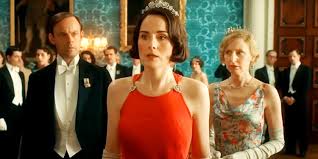
The third — “Downton Abbey: The Grand Finale” (shown here) — is in theaters now; “Downton” fans will love it, others will find it kind of interesting. It wraps up a splendid stretch that began with rejection.
Julian Fellowes (a screenwriter) and Gareth Neame (a producer) had been struggling to put together a project. “When at last we realized it was not going to fly, we got together to call it a day,” Fellowes wrote in “The World of Downton Abbey” (St. Martin’s Press, 2011).
That’s when Neame suggested something new: a TV series in the spirit of Fellowes’ Oscar-winning script for “Gosford Park,” which was set in the final days of the grand English manors.
“I have always enjoyed country homes,” Fellowes wrote. “As a child, wandering around the houses of my parents’ friends and relations, I was aware that I was looking at the remains of a way of life.”
He planned two Downton worlds, each with lots of likable people and some others:
— Upstairs, there’s Robert the Earl of Grantham (Hugh Bonneville), trying to preserve centuries of tradition … his wife Cora (Elizabeth McGovern), an American who brought a few new ideas and a lot of much-needed cash … his sharp-tongued mother … and his three daughters.
— Downstairs were the others — cooks, butler, valet, maids and more.
This was produced by Naeme’s company and would air on ITV, not BBC. It was a huge venture for ITV, which usually stuck to contemporary tales; to make it work, it needed money from an American partner.
That brought it to “Masterpiece Theatre” chief Rebecca Eaton, and the next rejection. As she wrote in “Making Masterpiece” (Viking, 2013):
“I think to myself that the project sounds a lot like …’Upstairs, Downstairs,’ of which we’d aired 68 episodes, from 1971 to 1975, and which we were about to remake with the BBC.” She said no.
“Downton” was also rejected by other U.S. spots, including HBO, the History Channel and even NBC — whose parent company (Universal) owns the company making “Downton.”
Fortunately, McGovern convinced Eaton to re-consider. This was just the sort of lush, layered production that makes “Masterpiece” work.
Fellowes went on to write all 52 episodes, plus the three movies. His characters went through immense changes — partly because of actors’ deaths or departures, partly because of changing times. “Downtown” spans two decades, from the Titanic sinking in 1912 to the first years after the stock market crash.
This third movie makes even that last part seem splendid. Early scenes — with London’s theater district a-glitter — are gorgeous. Then comes a sudden plot shift (shown here) that propels the rest of the film.
We won’t spoil any of the plot twists. You can catch “Grand Finale” in theaters and everything else — the series and the previous films — on Peacock, Amazon Prime or BritBox.
You can also soon see Bonneville in another terrific PBS role: “Gold” (10 p.m. Sundays, starting Oct. 5) has him as an upper-crust police official, colliding with the guys who accidentally stole a fortune.
And Fellowes has been busy co-writing HBO’s “The Gilded Age” — more splendor amid human complexity, this time in 1880s U,S.
Yes, HBO is one of the spots that passed on “Downton Abbey.” And Peacock is owned by Universal, which also passed. Fortunately, their rejections were merely temporary.
“Downton”: from rejection to soaring success
The “Downton Abbey” era began with two rejections. Then came the flip side, with soaring success.
That has included six PBS seasons, 69 Emmy nominations (with 15 wins) and three movies.
The third — “Downton Abbey: The Grand Finale” (shown here) — is in theaters now; “Downton” fans will love it, others will find it kind of interesting. It wraps up a splendid stretch that began with rejection. Read more…