Back in 1990, Ken Burns showed TV critics an extraordinary film.
He was 37 then, but looked much younger. He was a cherubic-looking guy with the enthusiasm of a kid and the vocabulary of an ancient scholar.
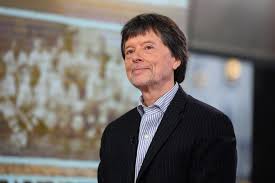
Burns (shown here, nowadays) had already made seven films on subjects — from Huey Long to the Statue of Liberty — that could be grasped in one night. But this was something else — the Civil War, spread over nine nights and 18 hours.
Members of the Television Critics Association praised it; still, he recalls, many wanted to “warn me that no one was gonna watch it, because there are these things called MTV videos that (have) eroded people’s attention span.”
The result? The film, he said, “remains the highest-rated program in the history of public programming.”
Burns was back with the TCA recently (this time via Zoom), with his latest project. “The American Revolution” starts at 8 p.m. Sunday (Nov. 16) on PBS, reruns at 10 and continues for five more nights.
But why a 35-year gap? “We said ‘no more wars'” after the Civil War film, Burns said, then changed that and did films on World War II and Vietnam.
Those subjects had advantages: There was existing film of World War II and of the Vietnam War; there were also survivors, still able to tell their stories. The Civil War, at least, had great photographs. The Revolutionary War had only paintings; Burns would need to do some modest re-enactments.
Those other three also had elaborate journals, diaries and books. Surprisingly, so did the Revolutionary War.
“One of the things that surprised me,” said producer David Schmidt, “is how many people left their memories of the period …. A lot more people were literate in North America” than in other spots. One historian said America trailed only Scandinavia as the world’s most literate place.
So in December of 2015, the work began. After fundraising, the next step went to Geoffrey Ward, a historian who has written 20 Burns projects.
“He really immerses himsself,” Sarah Botstein said, “while we try to figure out who’s alive that knows about the subject.”
The timing can be crucial: Bernard Bailyn — a two-time Pulitzer-winning historian who specializes in the revolutionary era — was interviewed before his death, at 97, in 2020.
Some people focused on the research, as did Ward. “(We) turn into an old-fashion library,” Botstein said. “It’s the quietest place on Earth.”
Others did the interviews — typically, 2-3 hour conversations– or found paintings and other illustrations. “There are more maps in this film than there are in all my other films combined,” Burns said. “I love maps.”
As Ward finished the script, the next stage kicked in, Botstein said. “We spent almost two years recording the actors from around the world, as we were editing and doing music sessions.”
Famous actors sometimes read the words of the obscure. Tom Hanks, Botstein said, “read the words of Albigence Waldo, who’s a footnote in a lot of other people’s story, but a primary force in the start of episode five.”
Waldo was a young doctor with the Connecticut regiment. His diary reflects a deep admiration for George Washington and agony over the soldiers’ ordeal.
There was no attempt to find parallels with modern times, Burns said; the production spanned three presidents and four administrations.
This result neatly points toward the 250th anniversary of the Declaration of Independence (next July 4), but Burns said that’s a coincidence. “When we were working on this, nobody was thinking about 250, nor were we.”
There was a moment, he said, when he thought this might be ready for the spring of 2025 and the 250th anniversary of the Lexington and Concord battles. “I went to Sarah and … she said, ‘We’re not going to make it.'”
Eventually, he decided November might be a better time, offering a thoughtful springboard to the 250-year celebrations. “My great worry … was that we would be drowned in fife-and-drum treacle.”
Maybe we will. But first, we’ll have a chance to see 12 hours about a complicated time, filled with horrors and heroes.
After 35-year gap, it’s Ken Burns’ revolution
Back in 1990, Ken Burns showed TV critics an extraordinary film.
He was 37 then, but looked much younger. He was a cherubic-looking guy with the enthusiasm of a kid and the vocabulary of an ancient scholar.
Burns (shown here, nowadays) had already made seven films on subjects — from Huey Long to the Statue of Liberty — that could be grasped in one night. But this was something else — the Civil War, spread over nine nights and 18 hours.
Members of the Television Critics Association praised it; still, he recalls, many wanted to “warn me that no one was gonna watch it, because there are these things called MTV videos that (have) eroded people’s attention span.”
The result? The film, he said, “remains the highest-rated program in the history of public programming.” Read more…