Strolling through a broadcast museum recently, I was struck by:
1) The immense role of late-night TV; and
2) How odd it is that CBS shed its late-night role. By dumping Stephen Colbert, it abandoned a slot it had struggled to get.
For CBS, late-night had long been a serious void. It was the “empty piece of the jigsaw puzzle that’s glared at us over the decades,” Howard Stringer, the network president, once told reporters.
That void was filled by David Letterman in 1993 and then by Colbert in 2015. For 33 years, CBS had a piece of what NBC has had almost forever.
As Pat Weaver, the long-ago NBC president, wrote in “The Best Seat in the House” (Knopf, 1994), NBC’s “Tonight” show “made money for us from its first night on the air; ‘Today,’ ‘Home’ and ‘Tonight’ together brought in $14 million in 1954 — a huge sum for those days.”
Which brings us to that museum journey.
After opening in 1987, the Museum of Broadcast Communication has bounced around Chicago. It’s had four locations and two stretches (totaling 13 years) with no physical home. Last year, it re-opened in a “pop-up” location at 440 W. Randolph, downtown.
There (until January) it has a fun set of exhibits. Three have Chicago roots — 65 years of Bozo the Clown … 55 years of “Svengoolie” introducing horror films … and 50 years of “The Loop” (fulfilling the museum’s alternate role as home of the Radio Hall of Fame).
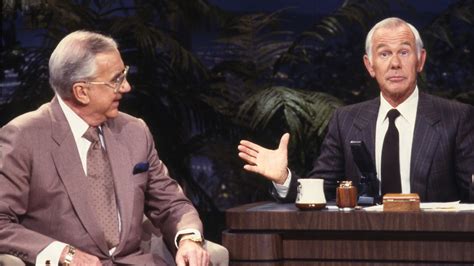
But the big exhibit is “75 Years of Late Night.” It has lots of Johnny Carson (shown here with Ed McMahon); people can walk through his curtain and sit at his desk, interviewing friends. It has samples of others, from Colbert to — way back — Faye Emerson.
THE START
Emerson was a movie actress, who came to New York to do theater and live TV dramas. A bleached blonde given to low-cut gowns and upscale subjects, she fit the new TV world.
“The Faye Emerson Show” was only 15 minutes long, but it had big-deal guests — Douglas Fairbanks Jr., Celeste Holm, Otto Preminger, etc. And it had odd timeslots, at 11 p.m. Mondays on CBS, 10:30 p.m. Sundays on NBC.
Emerson would later spend more than a decade on “I’ve Got a Secret.” But her place in history seems to be as the first late-night talk host.
THE NEXT TRIES
Emerson debuted in October of 1949 on CBS. A month earlier, Weaver had promised NBC station owners a late-night show: “We’ll run for an hour, with fun and songs and jollity and features and unrehearsed gimmicks. After 10 or 11 at night, a lot of people will still want to see something funny.”
The sort of show he envisioned had to wait, however. In May of 1950, NBC gave the 11 p.m. weekday spot to “Broadway Open House.”
That had two hosts — Jerry Lester for three days a week, Morey Amsterdam for two. It started hot and burned out quickly and was gone in 15 months.
“”With the collapse of ‘Open House,'” Weaver wrote, “it was time to get back to that earlier idea.”
For host, he wanted Steve Allen, known for odd stunts and intelligent conversation. “Tonight” debuted in September of 1954 and has been there ever since. It’s TV’s longest-running show, topping “60 Minutes” by 14 years.
Allen soon wanted a primetime show, dropping out of “Tonight.” That was “the only mistake Steve Allen made,” Weaver wrote. He “never again reached the level of popularity he had earned on ‘Tonight.'”
But during his two years, he introduced things that would later be perfected by David Letterman (wild stunts) and by Carson (opening monologs; also, a bit that innvolved giving the answer first, then saying the question).
UP TO PAAR
But before them, there were the five years with Jack Paar. His monologs were brief and his intentions were clear — assemble people for real conversations.
Paar also seemed to savor feuds — with Ed Sullivan (who hated paying full price for acts that did “Tonight” for minimum) … with Mickey Rooney (whom Paar asked to leave, for allegedly being drunk) … with gossip columnists … and with the NBC censors.
At one point, he read a story hinging on someone thinking that “WC” (for “water closet,” a toilet room) meant “wayside chapel.” It was long and funny … and censored by NBC, which filled the space with news briefs.
The next night, Paar walked off, leaving a startled Hugh Downs to finish the show. Paar didn’t return for three weeks, bringing big bursts of attention.
After five years, he departed. Like Allen, he went to prime time. Like Allen, he would never match his late-night fame.
THE CARSON ERA
The next host would stick around. Johnny Carson arrived in 1962 and stayed for 30 years, turning late-night into an art form.
Opening monologs? Carson made them longer and semi-topical … without being controversial. He could get a big laugh out of a joke’s failure … and make an offbeat line seem presentable.
(Pat McCormick, one of the show’s writers, gave an example of a joke that only Carson could sell to a mainstream audience. “There’s a new weight-loss plan: You sit on a cheese and swallow a mouse.”)
And there was that bit about saying the answer first and then the question: Other comedians had started it, Allen had popularized it and Carson perfected it, as Carnac the Magnificent.
At one point, for instance, he read the answer: “‘Breaking Away’ and ‘Here’s Boomer’.” (Both were the names of primetime shows.) The question? “What are two very bad names for a laxative?”
This was expansive TV — clever sketches … a big-band sound (led by Doc Severinsen) … and a full 90 minutes.
In 1980, after stormy contract negotiations, Carson insisted the show be trimmed to an hour. That took out some of his quirkiest moments … but made room for someone new: For more than a decade, the post-Carson spot became David Letterman’s playground.
THE SUCCESSION BATTLE
When Carson decided his 30th year would be the last, questions simmered.
Would “Tonight” go to Jay Leno (the show’s permanent guest host) or to Letterman? The struggle showed how steeply TV networks — including CBS, long before it shredded Colbert — coveted latenight.
For decades, they had floundered in that spot:
— ABC tried Les Crane for four months, a dreary Joey Bishop for two-and-a-half years and the clever Dick Cavett for six years.
— Two networks actually had late-nighters as their first shows. In 1966, it was the United Network, with Bill Dana hosting; the show and the network, lasted a month. In ’86, it was Fox with Joan Rivers; she lasted 18 months, with makeshift replacements lasting 18 more. Most of the subs faded, but one — Arsenio Hall — jumped into syndicated success.
— Fox later tried Chevy Chase. He lasted five weeks.
— And CBS kept trying.
THE CBS ORDEAL
CBS tried Merv Grtiffin for two-and-a-half years. Then he returned to syndication, sold to individual stations; most ran him in the afternoon, where he thrived.
Next came Pat Sajak, whose “Wheel of Fortune” was a syndicated hit. His low-key CBS show started strong … then lost half its audience in a week.
“It got so bad that the show was having trouble getting audieces to come to the studio for the tapings,” Bill Carter wrote in “The Late Shift” (Hyperion, 1993). “Yet Sajak didn’t change his demeanor — or his show — at all.”
Sajak lasted 15 months, while CBS coveted what others had.
With Carson leaving, it pondered three possibilities: It would try for whichever guy (Leno or Letterman) NBC didn’t take. And if ABC grabbed him to replace “Nightline”? CBS would start its own late-night news show, in the “Nightline” style.
But as time went on, Carter wrote, the CBS chief knew he wanted Letterman.
Stringer “burned with the desire to be able to stand up in front of a room full of reporters and make the announcement that David Letterman was coming to the network of Ed Murrow and Jack Benny.”
NBC chose Leno and tried to convince Letterman to stay in the late-late spot. CBS countered big: Letterman would make millions … and own the show … and produce the shows that followed … and produce primetime CBS shows.
All of that helped transform a network that Stringer had once joked had a target audience of people in their 80s. In primetime, Letterman’s “Everybody Loves Raymond” soared … in late-late-night, a Tom Sawyer interview show failed, but was followed by two Craigs, Kilborn and Ferguson. And in that late-show spot, Letterman sometimes dominated.
THE NEW NORMAL
Leno would eventually revive, partly on sheer quantity. He had longer monologs, more comedy bits from his desk and elsewhere.
But for his 22 years, Letterman made CBS the hip spot for latenight.
That continued in the 11 years with Colbert … especially after Donald Trump pushed the national dialog toward politics.
Viewers wanted political humor. At 11:35 p.m. (10:35 Central), they could find it on CBS with Colbert or ABC with Jimmy Kimmel. NBC had the amiable — but less political — Jimmy Fallon; an hour later, it bounced back with Seth Meyers, against CBS’ James Corden and ABC’s “Nightline.”
THINGS CRUMBLE A BIT
Trump raged at Kimmel, but ABC stood firm. He raged at Colbert … and CBS wobbled.
When its owner (Paramount) wanted to be sold, it needed federal approval. It decided that Colbert’s show would end in May of 2026.
The network argued that this was merely a financial decision and that Colbert’s show was losing $40 million a year. It simply rented out the 11:35 p.m. slot to a low-budget, non-topical show that sold its own ads.
Others wondered how one could lose $40 million on a desk-and-chair show. They wondered about abandoning a slot that had been so coveted, so important in promoting shows.
All of that is for another time. For now, we know that late-night TV is a big and colorful tradition … enough to fill up a museum alongside Bozo and Svengoolie and the rest.
It has gone from Faye Emerson to Jimmys and Seth. It has soared with Carson and Letterman and Leno, stumbled with Sajak and Chase. It has survived tough times and boardroom Bozos. It has some good years left.