In her early days as a free-lance journalist, Gloria Steinem said, one editor dismissed her abruptly.
That was at Life magazine. “We don’t want a pretty girl,” he said. “We want a writer.”
Steinem told the story in “Famous Last Words,” a fascinating Netflix show whose interviews aren’t released until after the person’s death. This one debuted Thursday (Sept. 3), the day after her death at 92.
What it shows is the Steinem (shown here) we’re accustomed to. She joked, laughed, recalled her decades of women’s-rights struggles fondly. “It doesn’t feel hard,” she said. “It feels like fun.”
That sense of fun came early. Although she didn’t mention it in the interview, there were apparently other editors who had no objection to someone being both beautiful and brilliant. On Aug. 20, 1965, Life printed her light-hearted story about fads, accompanied by photos of Steinem on skateboards and such.
Two years earlier, she had written “The Beach Book,” which showed that intelligence and whimsy could intersect. She included brief passages from Proust, Melville and Fitzgerald and had an introduction by John Kenneth Galbraith, who said he hated beaches. But she also told how to build a sand castle, fly a kite and get the perfect tan.
That same year, Steinem did the magazine story that blended the light and serious. The assignment was to work undercover as a Playboy bunny, then write about it. What emerged was a sharp rebuke of a sexist empire.
Looking back at that, Steinem said she liked the women — many of them working hard to support a family — but found Playboy founder Hugh Hefner “incredibly pathetic,” masking as the cool ladies’ man he could never be.
(All quotes here are from the Netflix interview.)
Even before that, she had sampled feminism.
Fresh from Smith College, Steinem spent two years in India, interviewing people who had known Mahatma Gandhi. She was with a group of women one day when one said: “Well, my dear, we taught him everything he knew.”
And there were hints of the future in other stories. In 1962 (a year before the Playboy article and the beach book), Esquire had assigned her to write about contraception. Her comments about women being forced to choose between career and marriage preceded Betty Friedan’s “Feminine Mystique” by a year.
But the real transformation, she has said, came in 1969, when she was covering a “speak-out” about abortion. Steinem — who had traveled to London to get an abortion at 22 — soon became a key force in feminism.
She often did it joyously. Steinem said some of her favorite moments were in her apartment, with “12 to 20 people, usually women” in animated conversation. She also said she enjoyed alone time there. “I love hanging around, reading or watching ‘Dance Moms.'”
That may be the biggest surprise in the Netflix show: This deeply erudite woman preferred reality shows — ones like “Project Runway” recently and “Dance Moms” before that.
As a kid in Toledo, Ohio, she had “imagined that I was going to get out by dance, which was insane.”
She wasn’t even a good dancer, she said, but she had much to escape. Her dad had a summertime dance hall in Toledo, but insisted that each winter they take their trailer to warm places, where he worked as an antiques dealer. “Going to school in a regular way” was impossible — but she would later graduate Phi Beta Kappa from Smith.
Her mom was frustrated by losing her identity as a reporter for the Toledo Blade, Steinem said. She had what was then called a “nervous breakdown” and was institutionalized often. “I knew she was regarded as the crazy lady in the neighborhood.”
Steinem’s father eventually left — they later divorced — leaving the 10-year-old Gloria in charge of her troubled mom. Her sister — nine years older and, later, a lawyer — eventually had the mother hospitalized, with Gloria finishing high school in Washington,. D.C.
By some views, that might have set Steinem on a path toward disliking men, but she denied that in the Netflix interview. Her father, she said, was “a wonderful, funny, kind-hearted man,” albeit irresponsible. And throughout her own romances, “I had a long run with good men.”
There were multi-year romances with several men, starting with her college boyfriend, but she resisted marriage. The one exception (at 66, to the father of actor Christian Bale) was partly because he was in risk of being deported and partly because a friend had offered a splendid Cherokee ceremony. That marriage was brief, however; he developed brain cancer and died.
What her parents’ marriage represented, perhaps, were the opposite sides of Steinem’s persona.
From her dad was a sense of joy, humor and adventure. “I couldn’t imagine getting up every morning and going to an office.”
And from her mom, she saw the tragedy of a woman’s career and hopes being set aside. Later, feminism became Steinem’s poime passion for six decades.
In 1972, she launched the magazine called Ms. “It wasn’t a huge financial success, but it was influential,” she said.
Like other magazines, it has dwindled, now coming out only four times a year, with a reported circulation of 110,000.
The movement has seen a wave of female leaders and a general acceptance of equal rights. It has also seen setbacks; lately, the promotions of female generals and admirals have been blocked.
But these “Famous Last Words” were taped before that, in February of 2025. “I get angry or discouraged,” Steinem said, “but I don’t lose all hope for the future.”
Her basic wish: “We need to be compassionate for each other.”
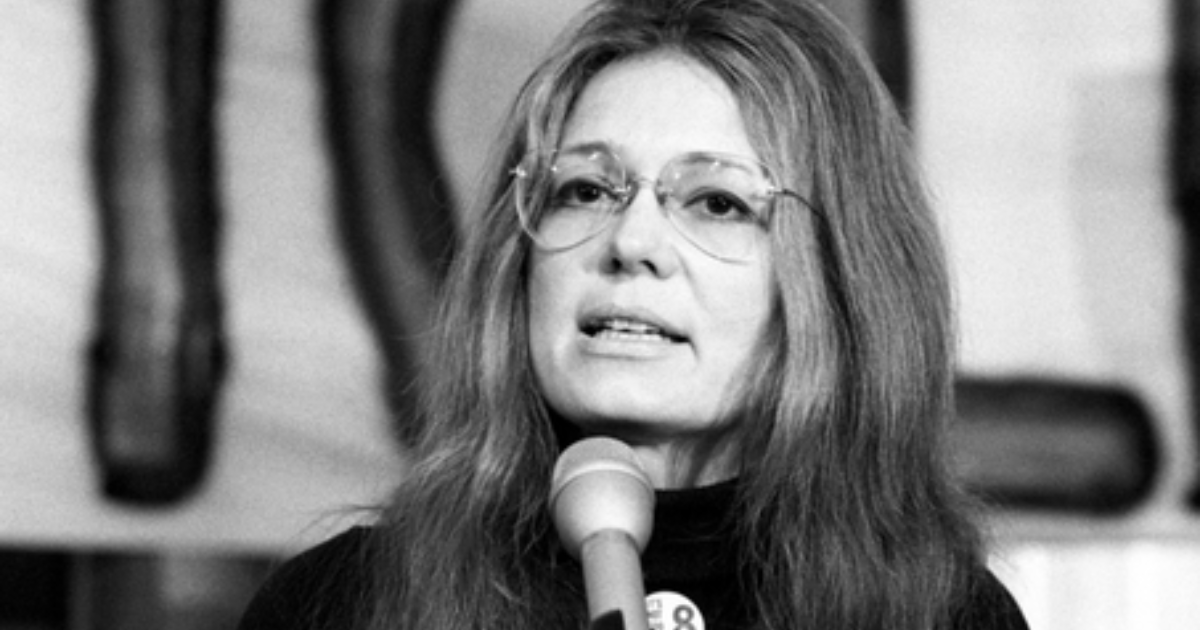
Steinem: a joyous journey to change the world
In her early days as a free-lance journalist, Gloria Steinem said, one editor dismissed her abruptly.
That was at Life magazine. “We don’t want a pretty girl,” he said. “We want a writer.”
Steinem told the story in “Famous Last Words,” a fascinating Netflix show whose interviews aren’t released until after the person’s death. This one debuted Thursday (Sept. 3), the day after her death at 92.
What it shows is the Steinem (shown here) we’re accustomed to. She joked, laughed, recalled her decades of women’s-rights struggles fondly. “It doesn’t feel hard,” she said. “It feels like fun.” Read more…